
SAKA, an affiliate of PGN Subholding Gas Pertamina, is an upstream oil and gas company that contributes to Indonesia’s efforts to achieve energy independence. As a country with a large population and rapid economic growth, Indonesia continues to experience increasing energy demand. In this context, SAKA plays an important role in supporting the country’s energy supply.
The use of environmentally responsible technology has become increasingly important for upstream oil and gas companies. This is in line with growing awareness of the impacts of climate change and the need to operate businesses sustainably. SAKA has taken various proactive measures to ensure that its oil and gas exploration and production activities are carried out with careful consideration of environmental and sustainability aspects.
SAKA Environmentally Friendly Innovations
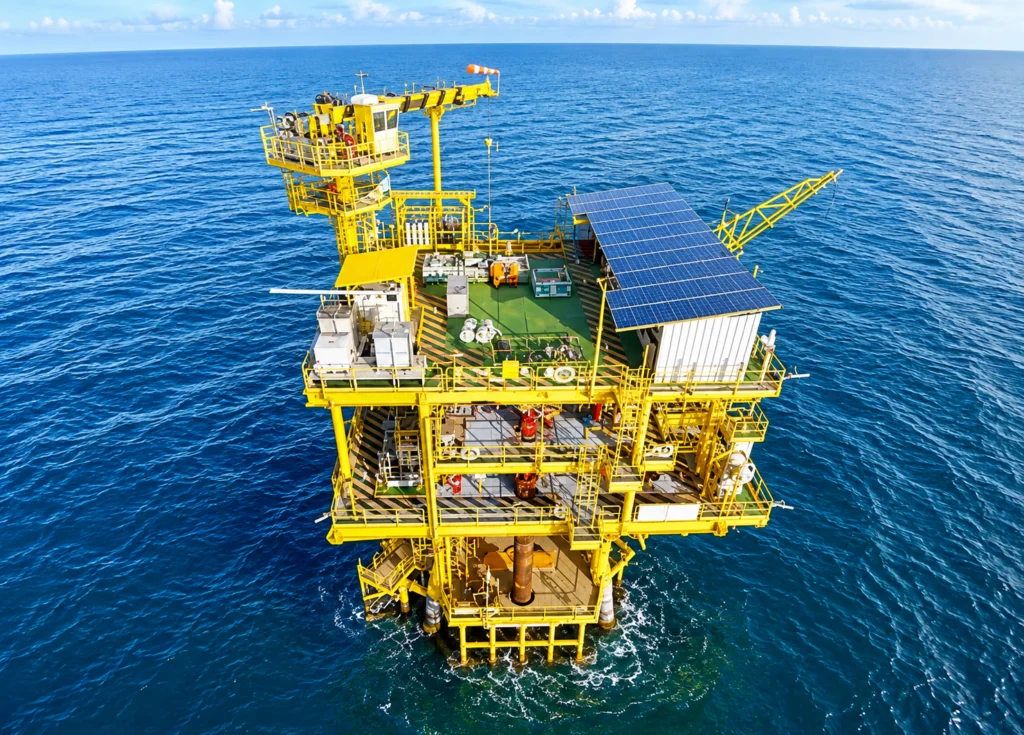
Emission reduction has become one of the key priorities in the implementation of safe, environmentally responsible, and sustainable technologies for future generations. These efforts form part of SAKA commitment to supporting PT Pertamina (Persero)’s target of reducing emissions by 30 percent by 2030. Various concrete initiatives have been implemented to support a more sustainable future.
In support of PGN’s decarbonization program, SAKA has implemented a range of decarbonization initiatives covering energy efficiency, renewable energy, carbon capture, and carbon offset. One of these initiatives is the installation of solar panels at the offshore Sidayu facilities in the Pangkah Block. The solar panels provide an independent energy source for electrical equipment at the facilities. They are installed at Well Head Platform C (WHP-C) and WHP-D with a total capacity of 18.36 kilowatt peak (kWp).
SAKA also actively contributes to decarbonization efforts by adopting environmentally responsible, efficient, and sustainable technologies in its asset operations. One of these initiatives is carbon offsetting to compensate for carbon emissions generated during natural gas production. The program includes mangrove planting around operational areas, with the potential to reduce greenhouse gas emissions by up to 16,417 tons of CO₂ equivalent per year.
In addition, SAKA utilizes exhaust gas generated by gas turbine generators (GTG). The exhaust gas is recovered using an absorption chiller, which not only helps reduce emissions by up to 1,687 tons of CO₂ equivalent per year, but also has the potential to generate energy savings of up to 34.047 MMSCF.
SAKA has also replaced the gas engine used in the flash gas compressor with an electric-driven flash gas compressor. This initiative can reduce emissions by up to 4,143 tons of CO₂ equivalent per year, with potential energy savings of 41.3 MMSCF.
Reducing Emissions to Address the Impacts of Climate Change
As an upstream oil and gas company contributing to greenhouse gas emission reduction efforts in Indonesia, SAKA continues to expand the use of renewable energy sources such as solar power and to implement more environmentally responsible operational technologies. These technologies help improve energy efficiency while reducing emissions that contribute to climate change.
SAKA involvement in emission reduction efforts forms an important part of addressing the increasingly evident impacts of climate change. At the national level, these initiatives also support Indonesia’s commitments under international agreements, including the Paris Agreement.
Through the utilization of renewable energy, improvements in energy efficiency, and the implementation of various decarbonization programs, SAKA continues to support national energy security while helping preserve environmental sustainability for future generations.